


The First Wearable to Track Ketones Around the Clock

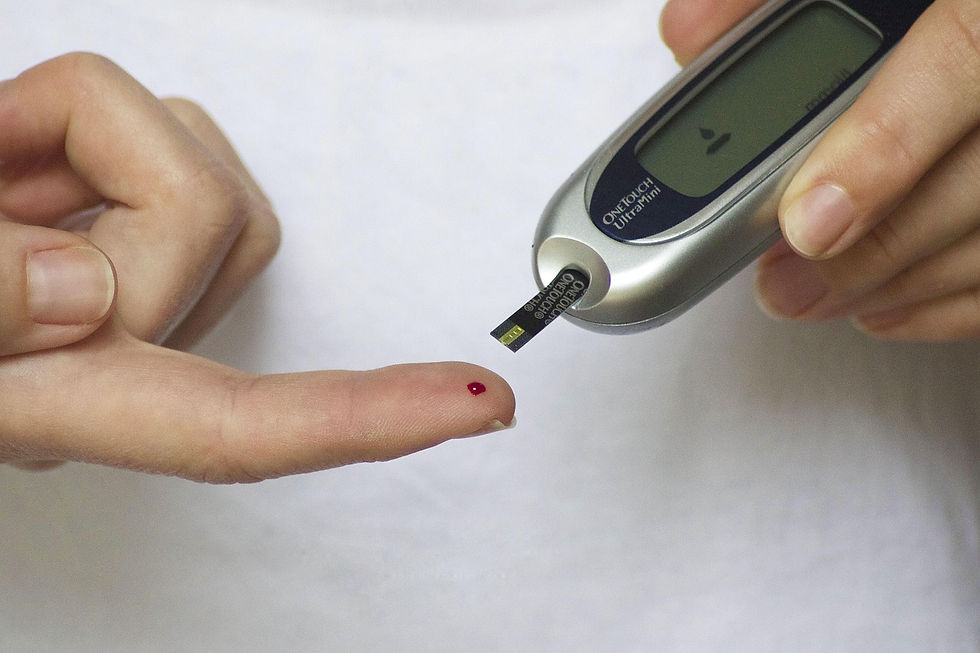
People with diabetes have had a monitor checking their glucose every few minutes for years now. Ketones never got the same treatment. Checking them has meant a urine strip or a finger-stick meter, which only happens when somebody thinks to check, and the moments when nobody thinks to check are exactly when trouble builds. A new device changes that. On August 25, the FDA authorized Abbott's Libre Duo 10 Day, the first wearable device in the United States to continuously monitor ketones, and the first anywhere to monitor ketones and glucose together in one sensor [1,2].
What the FDA actually authorized
The Libre Duo 10 Day is a small sensor worn on the body for up to ten days. It measures glucose and ketones in the fluid just under the skin and sends the results to a smartphone, where you can see both numbers and whether each is rising or falling. If ketones climb toward a concerning threshold, the device sends an alert on its own, without anyone deciding to test [1].
It is authorized for people with diabetes ages 2 and up. The FDA reviewed data from six clinical studies enrolling more than 600 participants to evaluate how accurately the sensor measures ketone and glucose levels across a range of values [1]. The agency granted it a De Novo authorization with breakthrough device designation, the pathway for an entirely new category of device rather than a copy of an existing one [2]. Abbott plans a US launch later this year [2].
One number from the wear testing needs a plain explanation: 84.1 percent of adult sensors and 68.8 percent of pediatric sensors lasted the full ten days [2]. So roughly one pediatric sensor in three stopped working early in testing. That is a practical detail families should hear before they build a safety routine around it.
Why ketones deserve their own alarm
Ketones are what the body produces when it burns fat for fuel. In small, steady amounts they are normal, and even useful. DKA happens in one specific situation: when there is not enough insulin around. Without insulin, ketone production rises unchecked, the blood grows more acidic, and the result is diabetic ketoacidosis, or DKA. DKA can progress within hours, and untreated it can lead to coma or death [2].
The frustrating part, clinically, is that DKA symptoms show up late. Nausea, vomiting, and deep labored breathing appear after the blood has already started turning acidic. A sensor tracking ketone trends all day is designed to move that discovery earlier. Michelle Tarver, who directs the FDA's device center, put it this way: knowing ketones are rising "can be the difference between early intervention and a life-threatening emergency" [3].
The case a glucose monitor cannot catch
The most clinically interesting part involves one class of diabetes drugs. Most people assume DKA comes with sky-high blood sugar, and usually it does. SGLT2 inhibitors, which work by sending glucose out through the urine, can produce DKA while glucose looks normal or only mildly elevated. In a 2026 review in Endocrinology and Metabolism Clinics of North America, the author identifies this exact problem, unrecognized ketosis and euglycemic ketoacidosis, as the principal barrier to using these drugs in type 1 diabetes, and describes continuous ketone monitoring as the technology that could make them safer [4].
The authors of a companion review in the same journal go further, describing a future in which therapies currently considered too risky could become usable with ketone monitoring plus safety engineering [5]. In other words, this sensor could do more than warn of DKA: it may change which medications people with type 1 diabetes can safely use at all.
There is a related point for everyone else. Ketogenic diets produce mild, controlled ketosis in people whose insulin system works, and that is a different physiologic state from DKA. But a person with diabetes combining insulin adjustments, appetite-suppressing medications, carbohydrate restriction, or illness is combining several risk factors, and glucose readings alone will not show that ketones are rising. Normal glucose has never meant all clear. Now there is a device built on that exact principle.
What this changes in my clinical conversations
I do not manage insulin pumps, and nothing here changes prescriptions. What it changes is a conversation I have weekly. Patients on newer diabetes and weight-loss medications ask me about low-carb and ketogenic eating, and my answer has always included a blind spot: we could watch glucose closely and ketones barely at all. A tool that measures both, continuously, shrinks that blind spot, and the decision about whether it belongs in someone's care belongs to the clinician who prescribes their diabetes medications.
Two caveats limit my enthusiasm. The authors of both reviews are clear that nobody has fully defined which ketone thresholds should trigger which actions yet; that research is still under way [4]. And insulin pump systems do not yet use ketone data in their dosing algorithms, so for the majority of type 1 patients on pumps, the ketone readings go to the person wearing the sensor rather than to the pump, for now [3].
If you are wondering whether this is for you
The device is authorized for people with diabetes. If that is you, especially if you take an SGLT2 inhibitor, have a history of DKA, or follow a lower-carbohydrate diet alongside insulin, this is a specific, current question to bring to your prescriber: would continuous ketone monitoring change how we handle my sick days, my medication choices, or my diet? Bring the question, not a decision. Availability, insurance coverage, and fit with your existing devices are all details your care team can actually answer once it launches.
If you do not have diabetes and you are curious about ketone data for its own sake, wait. The authorization, the alerts, and the evidence all belong to diabetes care. What counts as a meaningful ketone number for a healthy person experimenting with fasting or keto is a much less settled question.
References
Regulatory and press sources verified directly; research located and verified via PubMed.
US Food and Drug Administration. FDA Authorizes First Wearable Device That Continuously Monitors Both Ketone Levels and Blood Sugar. Press announcement, August 25, 2026. https://www.fda.gov/news-events/press-announcements/fda-authorizes-first-wearable-device-continuously-monitors-both-ketone-levels-and-blood-sugar
Abbott. Abbott receives FDA authorization for world's first dual glucose-ketone sensing technology for people with diabetes. Press release, August 25, 2026. https://abbott.mediaroom.com/2026-08-25-Abbott-receives-FDA-authorization-for-worlds-first-dual-glucose-ketone-sensing-technology-for-people-with-diabetes
Healio. First device to continuously monitor ketone and glucose levels receives FDA authorization. August 26, 2026. https://www.healio.com/news/endocrinology/20260826/first-device-to-continuously-monitor-ketone-and-glucose-levels-receives-fda-authorization
Akturk HK. Future of Continuous Ketone Monitoring and Its Utility for Safe Use of Sodium-glucose Cotransporter-2 Inhibitors in Type 1 Diabetes. Endocrinol Metab Clin North Am. 2026;55(3):515-524. PMID 42527000. https://doi.org/10.1016/j.ecl.2026.04.005
Hamidi V, Pettus JH. The Horizon Ahead: Emerging Adjunctive Therapies for Type 1 Diabetes. Endocrinol Metab Clin North Am. 2026;55(3):573-580. PMID 42527005. https://doi.org/10.1016/j.ecl.2026.04.012
Digest source article (inaccessible to automated fetch; drafted from the primary sources above): MedPage Today. FDA Authorizes First Wearable Dual Glucose-Ketone Sensor. https://www.medpagetoday.com/primarycare/diabetes/122753
A note before you go
This article is educational and is not medical advice. It cannot see your labs, your medication list, or your history. Decisions about diabetes medications, monitoring devices, or a change in how you eat belong in a conversation with the clinician who manages your care, and if you use insulin, that goes double. Please do not start, stop, or adjust any medication based on a blog post, including this one.
If this resonates with what you're experiencing and you'd like to explore a naturopathic approach, book a consultation with our clinic.



Comments