


The ATLAS Trial Tested a Popular Joint Supplement Combination. It Didn't Beat Placebo.

Curcumin and Boswellia are both on my shelf. So when a well-run trial tests them together in knee osteoarthritis and finds no benefit over placebo, I don't get to skip past it. I also don't get to stop at the headline, because a combination product failing is a different finding from either herb failing.
What the ATLAS trial found
The ATLAS trial ran in Australia from July 2024 to April 2025 [1]. Twelve weeks, double-blind, randomized, placebo-controlled. Eighty-four adults aged 40 and over with symptomatic knee osteoarthritis confirmed on X-ray, meaning visible joint changes rather than pain alone. Average age was 63.7 years and 57 percent were women.
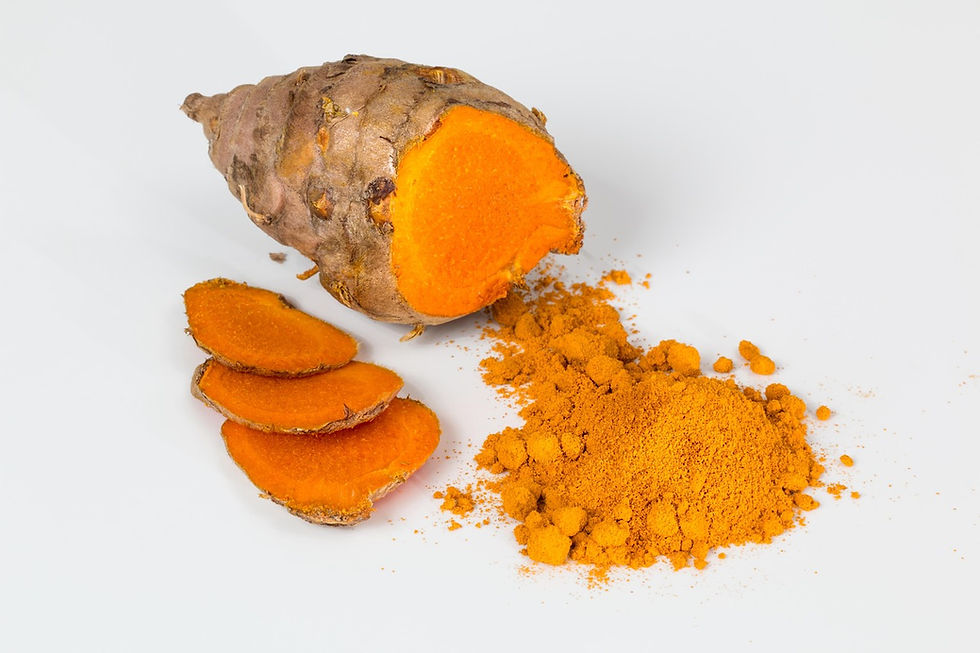
Half received a daily combination of Boswellia serrata extract 250 mg, pine bark extract 100 mg, methylsulfonylmethane 1,500 mg, curcumin 500 mg, and piperine 5 mg, a black pepper compound included to help absorption. Half received placebo. I'm describing what was tested, not recommending a formulation.
The primary outcome was change in knee pain over twelve weeks, measured on a 100 mm visual analog scale where you mark your pain along a line.
Both groups improved. The supplement group's pain dropped 20.1 mm. The placebo group's dropped 20.3 mm. The difference between them came to 0.16 mm, with a confidence interval running from about 7 points worse to 7 points better.
That interval is the informative part. The trial was set up to determine whether a difference larger than 18 mm could be ruled out, and the range it produced is narrow enough to exclude anything close to a clinically meaningful benefit in either direction. For this five-ingredient product, at these doses, that makes this an informative negative result rather than an inconclusive one.
Side effect rates were similar between the groups. Four people experienced serious adverse events, all judged unrelated to treatment.
What curcumin does on its own
Herbal trials are usually small, often short, and frequently funded by the companies selling the product. That's a reason to be careful with any single trial, positive or negative. It isn't evidence that the herbs don't work, and the pooled research on each herb separately looks considerably better than ATLAS does.
Curcumin has the larger body of evidence. A 2025 network meta-analysis, a type of review that compares several treatments across many trials at once, pooled 17 randomized trials and found that every turmeric preparation studied reduced knee osteoarthritis pain compared with placebo, and the bioavailability-enhanced preparations reached the threshold researchers use for a change patients notice [2]. The authors still rated the certainty of that evidence as low. A 2024 umbrella review that pooled 11 separate meta-analyses found consistent improvements in pain, stiffness, and function [3]. A 2021 meta-analysis of 11 trials covering 1,258 people found better pain relief with curcuminoids than with comparators, including NSAIDs, and no difference in pain relief between daily doses under 1,000 mg and doses above it [4].
What Boswellia does on its own
The Boswellia evidence is positive, though less consistent from trial to trial. A 2024 meta-analysis of 13 studies found no significant overall effect, largely because the trials differed so much from one another. When the authors looked only at trials comparing Boswellia with placebo, Boswellia lowered WOMAC scores, a standard measure of pain, stiffness, and function in knee osteoarthritis [5]. A second 2024 meta-analysis of nine trials covering 712 people found reductions in pain, stiffness, and function scores, with the largest effects from one standardized extract [6]. The authors of that second review are employed by a supplement company, so an independent group should confirm that result. A 2025 network meta-analysis of 20 trials found that modified Boswellia formulations improved pain, stiffness, and function, and it described combined curcumin-and-Boswellia products as under-studied [7].
A separate 2025 network meta-analysis of 39 trials covering 4,599 patients ranked Boswellia highest of seven supplements for knee pain, at about 17 points on the same 100-point scale ATLAS used [8].
Why a combination can fail when its ingredients don't
Dose is the first explanation. ATLAS gave 500 mg of curcumin and 250 mg of Boswellia extract alongside three other ingredients, and a fixed-dose product tests one specific formulation out of a very large number of possible ones. Dose alone is an incomplete explanation, though, since the 2021 meta-analysis found no difference in pain relief between curcumin doses under and over 1,000 mg a day [4].
Absorption is the second, and it's the one I think about most as an herbalist. Boswellia is a heavy oleogum resin, which is a sticky mix of oils, gum, and resin from the tree's bark, and in my clinical experience, compounding it with other herbs tends to impair absorption of both the Boswellia and whatever it's combined with. Nobody has studied that directly, so I can't point you to a trial that confirms it. What researchers have shown is that boswellic acids are poorly absorbed on their own, and that taking them with a high-fat meal more than doubles absorption of the two best-studied boswellic acids [9]. How Boswellia is taken clearly changes how much of it reaches the bloodstream. Whether it also changes absorption of a second herb in the same capsule is an open question. It is also important to note that the one head-to-head trial I found reported the opposite pattern. In 201 people, a curcumin-plus-boswellic-acid product beat placebo on both pain and physical performance, while curcumin alone beat placebo only on physical performance [10]. That trial had no Boswellia-only group, and it tested two branded commercial products, so it doesn't settle the question either.
Publication bias and study quality are the third. Small positive supplement trials get published more readily than small negative ones, and small low-quality trials tend to overestimate effects. Two of the reviews on these herbs said so directly [11, 12]. The 2017 review in particular found large short-term pain effects for curcumin and for pine bark extract, and no clinically important effect at longer follow-up [12]. It came from the same Sydney research group that later ran ATLAS, and they tested their own earlier signal in a combination product.
One more number in this trial is important, and it has nothing to do with the comparison. Both groups improved by roughly 20 points on a 100-point pain scale over twelve weeks. In the placebo arm, that came from an inert capsule plus twelve weeks of weekly monitoring by a research team.
An analysis of individual patient data from nine chronic pain trials, covering 2,017 people with osteoarthritis or low back pain, found that the number of planned face-to-face study visits predicted how large the placebo response was [13]. Being paid attention to, expecting to improve, that whole context produces measurable pain reduction. That's a documented clinical phenomenon, and it's part of why the setting of care influences outcomes as much as the contents of the bottle.
If you use curcumin or Boswellia for knee pain
Single herbs have better evidence than this combination. If you want to try something in this category, one ingredient at a time, in a form designed to absorb well, with a specific endpoint and a date to reassess, will teach you more than a five-ingredient blend ever will.
For curcumin, the bioavailability-enhanced preparations had the strongest results in the pooled trials [2]. For Boswellia, how you take it affects how much you absorb, and taking it with a meal that contains fat is one of the few absorption effects that has been measured [9].
Safety wasn't the issue here. Neither this trial nor the reviews found elevated adverse event rates for these compounds [1, 2, 8]. The open question is which products, at which doses, in which combinations.
Piperine is added to many of these formulations to improve absorption, and compounds that change absorption can affect how medications behave as well. If you take prescription medication, run any new supplement past your pharmacist or prescriber.
Speaking clinically rather than from these papers: most people who come to me with knee osteoarthritis have narrowed their activity down to protect the joint, and the deconditioning that follows tends to compound the problem. Rebuilding that activity is not something a capsule can do, and it wasn't what this trial set out to measure.
References
Yuan S, Liu X, Bracken K, Christensen R, Deveza LA, Collins S, Harnett JE, McLachlan AJ, Robbins S, Venkatesha V, Bowden JL, Hunter DJ. Effect of an oral complementary medicine combination for symptomatic knee osteoarthritis: A double-blind, randomized, placebo-controlled trial. Osteoarthritis Cartilage. 2026. PMID: 42331134. DOI: 10.1016/j.joca.2026.06.008. Original link from the digest: https://pubmed.ncbi.nlm.nih.gov/42331134/
Wai HS, Pathomwichaiwat T, Suansanae T, Nathisuwan S, Rattanavipanon W. Effect of turmeric products on knee osteoarthritis: a systematic review and network meta-analysis. BMC Complement Med Ther. 2025;25(1):292. DOI: 10.1186/s12906-025-05045-z
Bideshki MV, Jourabchi-Ghadim N, Radkhah N, Behzadi M, Asemani S, Jamilian P, Zarezadeh M. The efficacy of curcumin in relieving osteoarthritis: A meta-analysis of meta-analyses. Phytother Res. 2024;38(6):2875-2891. DOI: 10.1002/ptr.8153
Hsiao AF, Lien YC, Tzeng IS, Liu CT, Chou SH, Horng YS. The efficacy of high- and low-dose curcumin in knee osteoarthritis: A systematic review and meta-analysis. Complement Ther Med. 2021;63:102775. DOI: 10.1016/j.ctim.2021.102775
Dalmonte T, Andreani G, Rudelli C, Isani G. Efficacy of Extracts of Oleogum Resin of Boswellia in the Treatment of Knee Osteoarthritis: A Systematic Review and Meta-Analysis. Phytother Res. 2024;38(12):5672-5689. DOI: 10.1002/ptr.8336
Dubey V, Kheni D, Sureja V. Efficacy evaluation of standardized Boswellia serrata extract (Aflapin) in osteoarthritis: A systematic review and sub-group meta-analysis study. Explore (NY). 2024;20(5):102983. DOI: 10.1016/j.explore.2024.02.001
Inprasit C, Bunyamahote S, Boonpattharatthiti K, Thimkorn P, Intakhiao S, Dhippayom T. Evaluating the efficacy and safety of Curcuma longa, Boswellia serrata, and their mixed formulation in treating knee osteoarthritis: A systematic review and network meta-analysis. Complement Ther Med. 2025;96:103256. DOI: 10.1016/j.ctim.2025.103256
Zhang Y, Gui Y, Adams R, Farragher J, Itsiopoulos C, Bow K, Cai M, Han J. Comparative Effectiveness of Nutritional Supplements in the Treatment of Knee Osteoarthritis: A Network Meta-Analysis. Nutrients. 2025;17(15):2547. PMID: 40806131. DOI: 10.3390/nu17152547
Ammon HPT. Boswellic Acids and Their Role in Chronic Inflammatory Diseases. Adv Exp Med Biol. 2016;928:291-327. DOI: 10.1007/978-3-319-41334-1_13
Haroyan A, Mukuchyan V, Mkrtchyan N, et al. Efficacy and safety of curcumin and its combination with boswellic acid in osteoarthritis: a comparative, randomized, double-blind, placebo-controlled study. BMC Complement Altern Med. 2018;18(1):7. DOI: 10.1186/s12906-017-2062-z
Bannuru RR, Osani MC, Al-Eid F, Wang C. Efficacy of curcumin and Boswellia for knee osteoarthritis: Systematic review and meta-analysis. Semin Arthritis Rheum. 2018;48(3):416-429. PMID: 29622343. DOI: 10.1016/j.semarthrit.2018.03.001
Liu X, Machado GC, Eyles JP, Ravi V, Hunter DJ. Dietary supplements for treating osteoarthritis: a systematic review and meta-analysis. Br J Sports Med. 2018;52(3):167-175. PMID: 29018060. DOI: 10.1136/bjsports-2016-097333
Vase L, Vollert J, Finnerup NB, et al. Predictors of the placebo analgesia response in randomized controlled trials of chronic pain: a meta-analysis of the individual data from nine industrially sponsored trials. Pain. 2015;156(9):1795-1802. PMID: 25955965. DOI: 10.1097/j.pain.0000000000000217
Supporting references retrieved from PubMed.
This article is educational and is not medical advice. It doesn't replace working with a clinician who knows your full history. Nothing here is a recommendation to start or stop any supplement, and supplements can interact with prescription medication. Please loop in your provider or pharmacist before making changes.
If this resonates with what you're experiencing and you'd like to explore a naturopathic approach, book a consultation with our clinic.


Comments